Reduce Grid Dependence
Generate electricity on site and reduce the amount purchased from the grid during productive daylight hours.

Commercial Solar & Battery Storage Across Scotland
Reduce grid electricity costs, improve energy resilience and make better use of your commercial property with a solar PV and battery storage system engineered around your building, operating hours and energy demand.
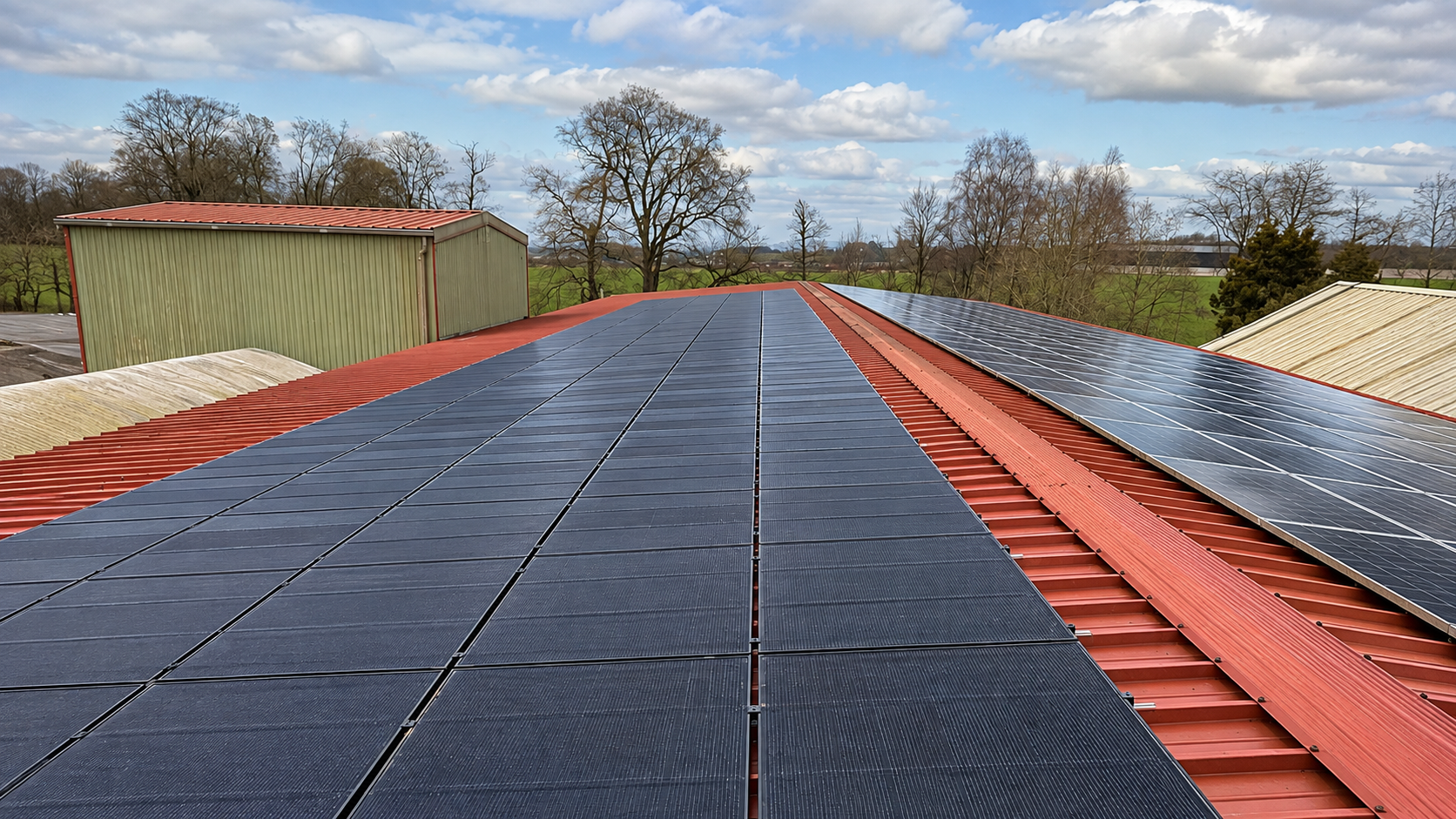
A Commercial Energy Decision
A productive commercial solar system begins with understanding when your organisation consumes electricity, how the building can support generation and where the energy will deliver the greatest value. Smart Group brings those decisions together in one coordinated project.
Generate electricity on site and reduce the amount purchased from the grid during productive daylight hours.
Model expected generation and energy use before committing to a system or finance route.
Produce traceable renewable electricity that can contribute to organisational sustainability objectives.
Consider batteries, EV charging, heating and future electrical demand as part of the initial design.
One Coordinated Energy System
Solar PV is the generation layer. Battery storage and intelligent controls can help the business retain and use more of that electricity when the operating profile supports it.
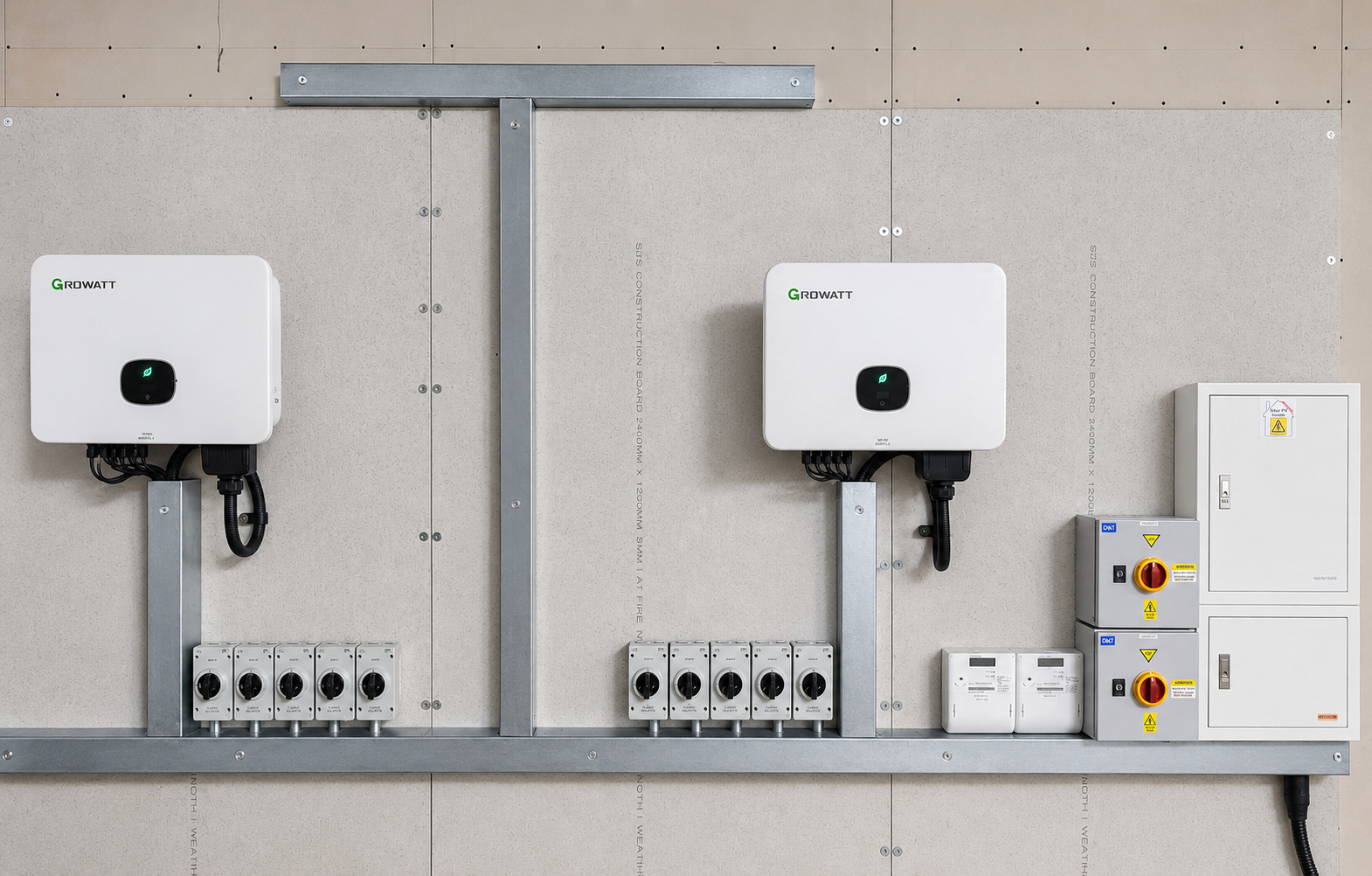
A system sized around usable roof or ground space, structural constraints, electrical infrastructure and measured consumption.
Store selected surplus generation or charge strategically where the site profile and electricity tariff create a sound case.
Coordinate generation, storage and consumption so the system responds to how the property actually operates.
Plan metering, DNO requirements and eligible export arrangements without making export income the sole basis of the project.
Commercial Applications
The best opportunity is often where daytime electricity demand and suitable generation space overlap. Every site still requires its own technical and financial assessment.
Large roofs, machinery loads and predictable operating hours can create a strong on-site consumption profile.
Solar generation for agricultural buildings, diversified enterprises and energy-intensive rural operations.
Make productive use of extensive roof areas while considering lighting, refrigeration, fleet charging and future demand.
Align daytime generation with office occupancy, cooling, IT infrastructure and vehicle charging.
Assess year-round electricity demand across kitchens, accommodation, pools, gyms and guest facilities.
Support longer-term energy planning for schools, halls, charities, housing providers and local organisations.
The Smart Commercial Process
Your proposal should explain why a system is suitable, not simply how many panels will fit. We review the property, electrical demand and delivery constraints before final specification.
We discuss the building, operating pattern, electricity costs, planned changes and the outcomes your organisation wants to achieve.
Our team reviews available installation space, shading, structure, electrical infrastructure, access and practical project constraints.
Consumption data is compared with expected generation to estimate on-site usage, possible export and the role of storage.
We specify appropriate panel, inverter, mounting, battery and control equipment rather than starting with a generic package.
Structural, planning, metering and Distribution Network Operator requirements are identified and coordinated where applicable.
The project is scheduled, installed, tested and commissioned with clear communication around access and business continuity.
Your team receives system documentation, monitoring guidance and practical support to understand ongoing performance.
Commercial Purchase & Funding
The appropriate route depends on available capital, property tenure, project scale, credit approval and how your organisation wants to account for the investment.
Finance and funded arrangements are subject to eligibility, status, lender or investor approval and contractual terms. Savings, generation, export income and payback periods vary by property, consumption, tariff and system design. Smart Group does not guarantee a particular financial return.
Commercial Solar Costs
Generic cost tables can hide the factors that materially change a commercial project. Smart Group provides a property-specific proposal covering the system, installation assumptions and relevant project dependencies.
Panel quantity, inverter architecture, battery capacity, controls and monitoring requirements.
Mounting method, structural work, roof condition, shading and available installation area.
Scaffolding, lifting equipment, working restrictions and measures needed to protect normal operations.
Cable routes, switchgear, metering, connection capacity and any required distribution-board upgrades.
Network applications, export limitations, design work and other site-specific professional input.
Why Smart Group
Smart Group coordinates the assessment, system thinking and installation rather than treating each part as an isolated transaction. That creates clearer responsibility from the first site conversation through to commissioning.
Recommendations are based on the building and its demand—not a standard system package.
Solar, storage, electrical infrastructure and DNO requirements are considered together.
Work is delivered through appropriately competent teams and recognised industry standards.
Practical understanding of Scottish properties, weather, grid constraints and project logistics.
Supporting Property Compliance
Where required, Smart Group can help coordinate non-domestic EPC assessment and improvement planning through suitably qualified specialists. This can give property owners a clearer view of the building’s energy performance alongside potential renewable-energy improvements.
Non-domestic EPCs in Scotland use an asset rating produced through an approved assessment methodology and are lodged on the Scottish EPC Register. EPC requirements and renewable-energy project design should be considered as related but distinct professional services.
Ask About Commercial EPC SupportQuestions & Answers
Initial answers to the practical questions businesses ask before commissioning a detailed assessment.
The result depends on system size, available installation space, electricity consumption, operating hours, tariffs and how much generated power is used on site. Smart Group models these factors before presenting an estimate; no universal saving percentage applies to every business.
Commercial project costs vary significantly according to capacity, equipment, mounting, access, structural requirements, electrical work and network connection conditions. Following an initial review and site assessment, Smart Group can prepare a specification-led proposal.
Not always. A battery may be valuable where solar generation and demand occur at different times, where tariff optimisation is possible or where specific resilience objectives apply. It should be justified by consumption data and the proposed operating strategy.
Eligible generators may be able to access an export tariff such as the Smart Export Guarantee. Rates, metering requirements and contractual terms vary between providers. Export should normally be modelled as one component of the project rather than assumed to fund the entire installation.
Many commercial installations require a Distribution Network Operator application or notification. The route depends on system capacity, export arrangements and the local network. Smart Group identifies and coordinates the relevant process as part of project development.
Most work can be planned around normal operations, although some controlled access and an agreed electrical shutdown may be required. The installation plan should identify these requirements before work begins.
Factories, farms, warehouses, offices, retail premises, leisure facilities and public buildings can all be suitable. Roof condition, structure, orientation, shading, electrical capacity, tenure and energy demand determine the actual opportunity.
The timescale depends on the size and complexity of the installation, site access, structural or planning requirements, equipment availability and the DNO process. Smart Group provides a project-specific programme once the technical scope is understood.
Start With the Property and the Data
Tell us about the building, your electricity use and what you want the project to achieve. Smart Group will review the initial information and explain the most useful next step.