Generate
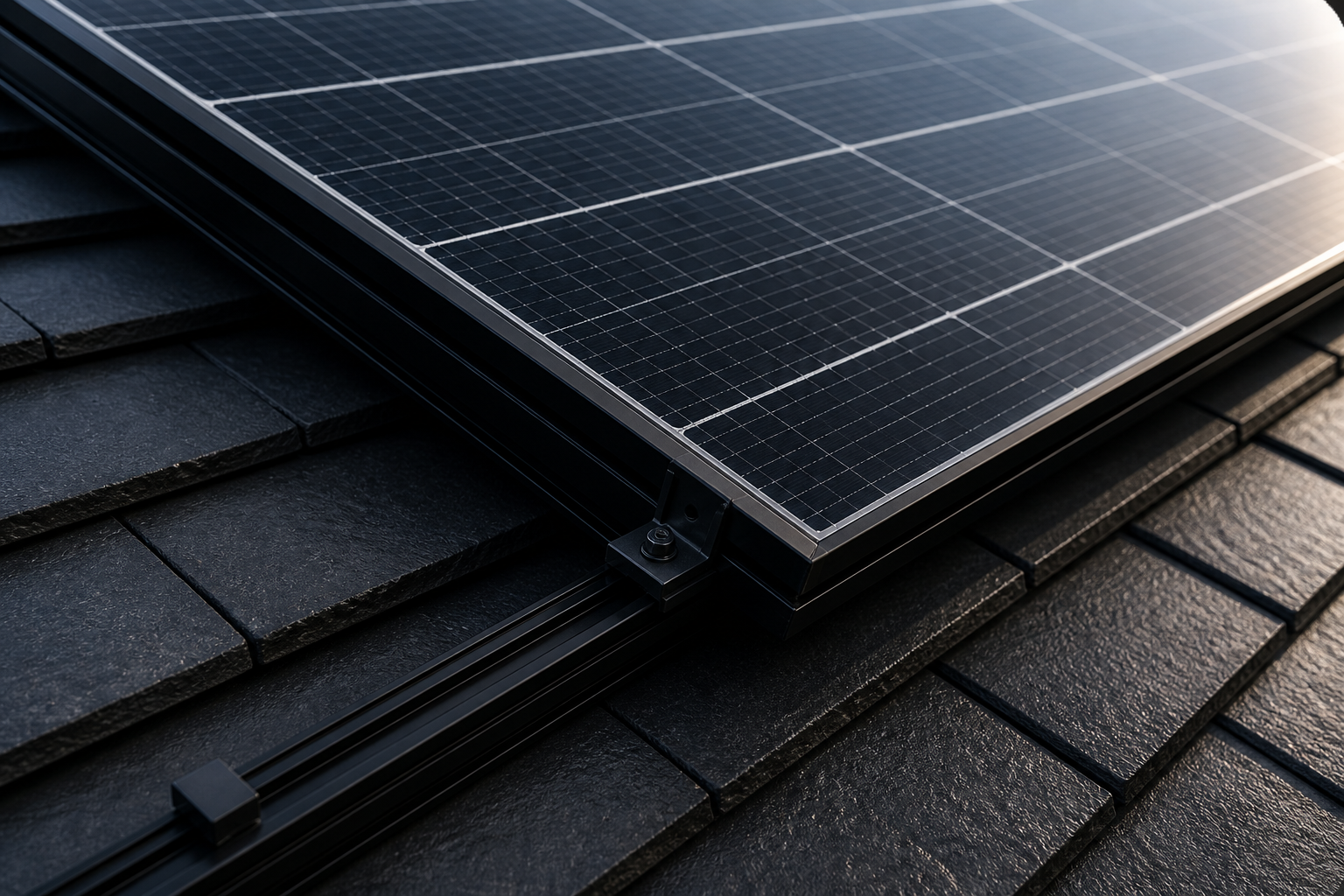
Solar cells convert daylight into direct-current electricity. Output changes with light level, orientation, shading and temperature.

The 2026 Scottish Homeowner Guide
How solar panels perform in Scotland, what they cost, how to judge roof suitability and what determines the savings a well-designed solar PV system can deliver.
Reviewed and updated September 2026
The Short Answer
Yes. Solar photovoltaic panels generate electricity from daylight, not heat, and continue producing on cloudy days. Scotland receives less annual solar irradiation than southern England, but a correctly positioned and sensibly sized system can still make a meaningful contribution to household electricity use.
The important questions are how much unshaded space is available, when the home uses electricity and whether the proposed system is designed around those conditions.
How Solar PV Works
A home solar system combines panels, mounting, electrical protection, an inverter and monitoring. Each part must be specified and installed as one coordinated system.
Solar cells convert daylight into direct-current electricity. Output changes with light level, orientation, shading and temperature.
An inverter changes the direct current into alternating current suitable for household circuits and the electricity network.
The home uses available solar electricity first, reducing the amount that needs to be purchased from the grid at that moment.
Surplus electricity can charge a compatible battery or be exported through an appropriate metering and tariff arrangement.
Is Your Roof Suitable?
A south-facing roof is helpful but not essential. East- and west-facing arrays can provide useful generation across a broader part of the day and may better match household demand.
The roof direction and angle influence annual generation and the times of day when the system is most productive.
Nearby buildings, chimneys, trees and roof features can reduce output. Shading should be assessed across the year, not from one observation.
Roof edges, ridges, valleys, windows and safe fixing zones affect how many panels can be arranged without forcing a cramped design.
The roof covering, supporting structure and remaining service life should be considered before installing equipment expected to remain for decades.
Scaffolding, safe installation access, inverter position and a tidy route to the electrical equipment all form part of a proper survey.
Solar System Sizes Explained
Solar systems are normally described in kilowatt peak, or kWp—the combined rated output of the panels under standard test conditions. Real output changes throughout the day and year.
The array has to fit the usable roof safely and coherently.
Consumption helps establish how much generation the household can use.
When electricity is used can matter as much as the annual total.
EV charging, heat pumps and changing occupancy can affect the appropriate design.
A larger array can still be sensible where export, storage or future electrification has been considered. It should not simply be added because more panels fit.
Solar Panel Costs in Scotland
Energy Saving Trust currently uses an indicative cost of around £7,600 for an average 4.5kWp domestic system. Your actual proposal may be lower or higher depending on the property, equipment and installation scope.
Compare quotations by system design, predicted generation, equipment, warranties and scope—not solely by the headline total.

Generation Through the Year
Generation is seasonal. The system will usually produce far more electricity across spring and summer than during the shortest winter days, so annual and monthly estimates are more useful than a single daily figure.
Regional solar irradiation and local weather patterns affect the annual estimate.
South generally maximises annual output, while east-west arrays spread production across morning and afternoon.
Even partial shade can affect a string of panels, depending on system architecture and the time of day.
Temperature, wiring, inverter efficiency, mismatch and other normal losses should be included in the performance estimate.
Savings and Payback
Every unit of solar electricity used in the home replaces a unit that would otherwise have been purchased at the import tariff. Electricity exported may receive a separate, usually lower, export rate.
| Factor | Why it matters | How to improve the outcome |
|---|---|---|
| Self-consumption | Using generation directly usually delivers greater value than exporting it. | Move flexible loads into daylight hours where practical. |
| Import tariff | The avoided purchase price affects the value of each unit used at home. | Review tariffs using the household’s actual consumption profile. |
| Export tariff | Rates vary between providers and may have eligibility conditions. | Compare current Smart Export Guarantee offers and terms. |
| System performance | Orientation, shade, faults and downtime influence lifetime generation. | Choose sound design, monitoring and appropriate maintenance. |
| Future electricity use | EVs, heat pumps or working from home can change daytime demand. | Discuss credible future changes during the design stage. |
Solar Panels and Battery Storage
A battery can store selected surplus generation for later use, but it adds cost, conversion losses and another component with its own capacity and warranty. It should be sized from evidence rather than treated as an automatic extra.
A battery may shift daytime generation into the hours after the sun goes down.
The headline capacity is not always the amount routinely available to the home.
Capacity and maximum charge or discharge power describe different limitations.
Some systems can charge from the grid when tariff and controls support it.
The future battery-storage service page will explain these decisions in detail. Until then, Smart Group can assess storage as part of the solar proposal.
Smart Export Guarantee
A route to payment for eligible electricity exported to the grid.
The Smart Export Guarantee requires participating electricity suppliers to offer an export tariff to eligible small-scale generators. Solar PV installations in Great Britain with total installed capacity up to 5MW can potentially qualify, subject to the scheme and supplier criteria.
The supplier determines its rate, contract length and additional conditions. You will need suitable export metering, and the provider may request installation certification and other evidence.
Read Current Ofgem SEG GuidancePlanning and Property Considerations
Many domestic roof installations can be completed under Scottish permitted-development rights, but limitations apply. Listed buildings, World Heritage Sites, conservation settings, unusual mounting positions and ground-mounted arrays require particular care.
Many conventional domestic installations fall within permitted-development limits.
Listed-building consent or planning permission may be required.
Location, visibility and the specific building can affect the route.
Separate rules and dimensional restrictions may apply.
Planning status should be checked for the actual proposal rather than assumed from a neighbouring installation.
From Assessment to Handover
The quality of the finished array depends on decisions made before anyone steps onto the roof.
Review the property, energy use, tariff, future plans and what the homeowner wants the system to achieve.
Assess roof space, orientation, shade, condition, access, electrical equipment and proposed cable routes.
Specify array layout, panels, inverter, mounting, protection, monitoring and any storage integration.
Provide predicted generation and financial assumptions appropriate to the proposed system and location.
Confirm planning considerations and complete the relevant Distribution Network Operator process.
Complete mounting, electrical work and testing with appropriate access and weather protection.
Verify safe operation, generation, protection settings, monitoring and system communication.
Provide certification, warranties, operating guidance and information needed for eligible export arrangements.
Maintenance and Lifespan
Solar panels have no moving parts, but the complete installation still benefits from monitoring and periodic inspection.
| Component | Good practice | When to investigate |
|---|---|---|
| Generation monitoring | Review normal seasonal patterns rather than expecting identical daily output. | Unexpected sustained reduction or loss of system communication. |
| Panels | Visually check from a safe position after severe weather. | Visible damage, movement, persistent heavy soiling or bird activity. |
| Inverter | Keep ventilation clear and follow manufacturer guidance. | Fault lights, repeated shutdowns, noise changes or loss of generation. |
| Electrical system | Arrange competent inspection in line with system documentation. | Damaged cables, water ingress, burning smells or protective-device operation. |
Questions and Answers
Clear answers to the questions Scottish homeowners ask before requesting an assessment.
Yes. Solar PV panels use daylight and continue generating under cloud, although output is lower than in strong direct sunlight.
Yes. Annual generation is lower than in some southern regions, but a properly assessed Scottish roof can still produce useful renewable electricity and reduce grid purchases.
No. South-facing roofs often maximise annual generation, but east- and west-facing arrays can work well and may spread production across more of the day.
Energy Saving Trust currently uses an indicative figure of around £7,600 for an average 4.5kWp home system. Actual cost depends on system capacity, roof, access, equipment, electrical work and whether battery storage is included.
The answer depends on individual panel wattage, usable roof area, household demand and project goals. Compare systems by total capacity and predicted generation rather than panel count alone.
A standard grid-connected solar system normally shuts down during a network outage for safety. Backup operation requires specifically designed compatible equipment and circuits.
Not automatically. A battery may increase self-consumption, but capacity, power, tariff, consumption and cost should be modelled for the household.
Eligible systems may access a Smart Export Guarantee tariff. Rates, metering and contractual requirements vary between electricity suppliers.
Quality solar panels commonly carry long performance warranties, often around 25 years or more. Inverters and other components can have different expected lives and warranty periods.
Rainfall removes much ordinary dirt from a suitably pitched array. Cleaning may be useful where persistent deposits affect performance, but it should be completed safely using appropriate methods.
Yes, provided the roof is suitable and the installer uses the correct mounting system and slate-working methods. Roof condition and access should be established during the survey.
A properly designed and installed mounting system should protect the weatherproofing and structural integrity of a suitable roof. The roof should be assessed before installation.
Start With a Technical Assessment
Smart Group will assess the roof, shading, household electricity use and future energy plans before recommending a solar PV system.