Generate at Home
Use renewable electricity produced on your roof while the panels are generating.

MCS-Certified Solar Panel Installers in Glasgow
Smart Group designs and installs solar PV and battery storage systems for homeowners across Glasgow and the surrounding area. Every recommendation starts with the roof, shading, electricity use and what you want the system to achieve.
No cold calls. No high-pressure sales. Clear technical advice from assessment to handover.
Solar PV in Glasgow
Yes. Solar photovoltaic panels generate electricity from daylight rather than heat, so they continue producing during cloudy weather. Glasgow receives less annual solar irradiation than southern England, but a properly assessed and sensibly sized system can still reduce the electricity a home buys from the grid.
Use renewable electricity produced on your roof while the panels are generating.
Replace a proportion of imported electricity rather than relying on an exaggerated fixed saving.
Add a correctly sized battery where the usage profile and economics support it.
Account for future EV charging, electric heating and changing household demand.
The Technical Assessment
A south-facing roof is useful, but it is not the only workable option. East–west arrays can perform well and spread generation across more of the day.
We assess usable roof space, roof covering, pitch, orientation and likely access. If the roof is approaching replacement, that should be addressed before committing to a long-life solar array.
Chimneys, trees, neighbouring buildings, dormers and roof geometry can affect generation. The design must model those conditions rather than relying on a postcode-level estimate.
The value of solar depends on when the household uses electricity. Working from home, daytime appliance use, EV charging and heat-pump plans can all influence system size and control strategy.

Glasgow-Area Project
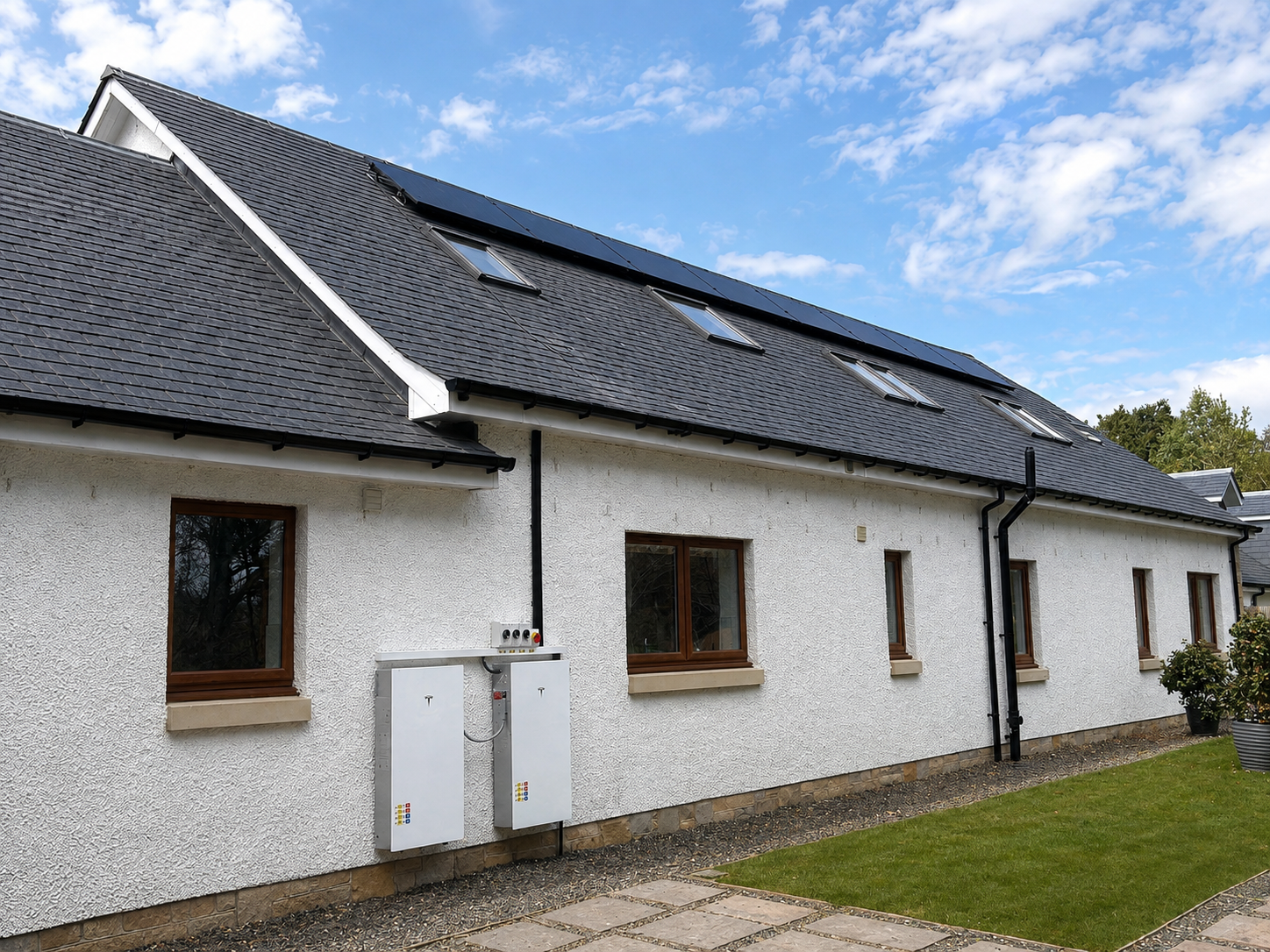
At Ashcroft, Smart Group combined a 4kW solar PV array with 4.8kWh of battery storage. The installation was designed around the property and completed with the required MCS certification.
This completed Glasgow solar panel installation shows how solar PV and battery storage can be designed together around the property’s roof, electricity demand and future energy plans.
Realistic 2026 Costs
Energy Saving Trust currently uses an average UK installation figure of around £6,100 for solar panels and around £4,600 for a 5kWh battery. These are broad benchmarks—not a quotation for a Glasgow property.
| Cost factor | Why it matters | What Smart Group assesses |
|---|---|---|
| System capacity | More panels and inverter capacity change equipment and installation costs. | Roof space, demand and the output the household can use. |
| Roof type and access | Slate, tile, height, scaffolding and roof complexity affect labour and access. | Mounting method, weatherproofing and safe installation. |
| Battery storage | Capacity, power and backup capability materially affect price. | Whether storage produces enough practical value for the household. |
| Electrical work | Consumer-unit, cable routes, earthing and connection work vary by property. | The existing electrical system and required upgrades. |
| Grid connection | The export capacity and G98/G99 route can affect design and timescale. | DNO requirements and whether export limitation is appropriate. |
Grants, Loans & Finance
Scottish funding programmes change, and eligibility depends on the applicant, property and measures being installed. Do not assume that a general home-energy scheme automatically funds solar PV or battery storage.
Home Energy Scotland provides free, impartial advice and publishes current information about Scottish Government grants and optional interest-free loans. Check the live scheme rules directly before relying on funding in a project budget.
Some support is focused on renewable heating or energy-efficiency improvements rather than standalone rooftop solar. Eligibility and available amounts can change, so Smart Group will not present provisional support as guaranteed funding.
If finance is being considered, compare total repayment, interest, fees and ownership terms against a conservative estimate of electricity savings and export income.
The Smart Group Process
One team coordinates the technical decisions, installation and paperwork from Glasgow home assessment to handover.
Tell us about the property, electricity use and whether you are considering solar, a battery or both.
We assess roof geometry, shading, access, electrical supply and the household’s energy objectives.
The proposed array, inverter and optional storage are specified around the home rather than a generic package.
You receive the system specification, generation assumptions, scope, price and practical next steps.
The appropriate SP Energy Networks connection route is managed as part of the project.
The team installs the roof, electrical and monitoring equipment with care for the property.
The system is tested, configured and demonstrated before handover.
Required commissioning information and MCS documentation are completed for the installation.
Glasgow-Specific Considerations
Local conditions should be addressed openly rather than hidden behind a generic solar calculator.
Many domestic roof-mounted systems in Scotland fall within permitted development rights, but restrictions apply. Listed buildings, conservation areas and unusual proposals require individual checks.
Glasgow is within the SP Energy Networks distribution area. Smaller compliant generators may use G98, while larger or combined systems can require advance G99 approval or an export-limitation design.
Panels still generate in overcast conditions, but production is lower in winter when daylight is shorter. Annual modelling should reflect Glasgow’s location and roof conditions.
Many Glasgow-area homes have slate, multiple roof planes, dormers or chimneys. Correct mounting, weatherproofing and careful layout matter as much as panel selection.
Local Coverage
Smart Group is based in Cumbernauld and serves homeowners across Glasgow and the surrounding Central Belt. Property suitability and travel are confirmed as part of the enquiry.
Questions & Answers
Answers to the main questions Glasgow homeowners ask before arranging an assessment.
Read the Complete Solar Panel GuideYes. Solar panels generate from daylight and can make a useful contribution to a Glasgow home’s electricity demand. Output depends on roof orientation, pitch, shading and system size.
Cost varies by capacity, roof type, access, equipment, electrical work and whether battery storage is included. Energy Saving Trust’s broad current benchmark is around £6,100 for solar panels, but a property assessment is needed for an accurate proposal.
Compare MCS certification, proposed equipment, generation assumptions, warranties, workmanship, aftercare and completed local installations. A reputable Glasgow solar company should explain why the recommended system suits your property rather than relying on a standard package or guaranteed-saving claim.
No. East- and west-facing roofs can work well and may spread generation across more of the day. The complete roof layout and shading should be assessed.
Yes, if the roof is in suitable condition and the correct slate-working and mounting methods are used.
Not automatically. A battery can increase the amount of solar electricity used at home, but capacity, power, tariffs, consumption and cost should be modelled for the household.
Many installations fall within Scottish permitted development rights. Listed buildings, conservation areas and other restrictions can change the position, so the property should be checked.
Smart Group coordinates the appropriate connection process with SP Energy Networks, including advance applications where the proposed equipment requires them.
A standard grid-connected solar system normally shuts down during an outage. Backup operation requires specifically designed compatible equipment and a defined backup circuit.
Eligible systems may access an export tariff such as the Smart Export Guarantee. Rates, metering and contract requirements vary between suppliers.
The on-site period depends on system size, roof access, electrical work and weather. The complete project timescale can also include survey, design, DNO approval and scheduling.
Quality panels commonly carry long performance warranties, often around 25 years or more. Inverters, batteries and other components have separate warranty periods.
MCS certification demonstrates that the installation is completed within a recognised quality framework and is commonly required for export tariff eligibility and some finance arrangements.
Start With the Property
Tell Smart Group about your roof, electricity use and future energy plans. We will review the enquiry and explain the most practical next step.